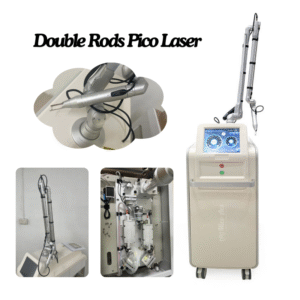
Q-Switched Nd:YAG Lasers
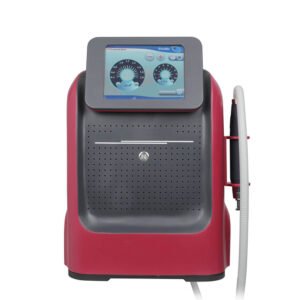
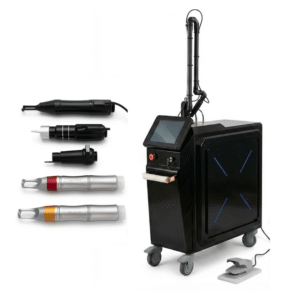
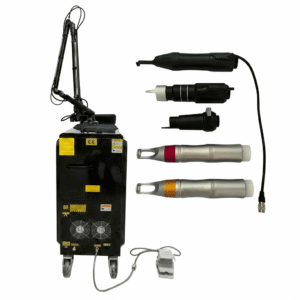
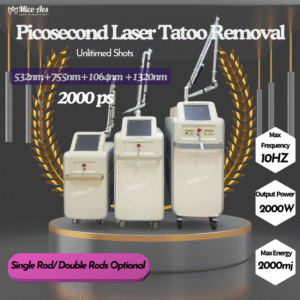
Nanosecond Nd:YAG systems commonly provide 1064 nm and 532 nm options for selected tattoo colors and benign pigmentation applications.
✓ Pengiriman DHL/FedEx/UPS | ✓ DDP AS Tersedia | ✓ Pelatihan Profesional | ✓ Dukungan Teknis Seumur Hidup
Mengeksplorasi professional tattoo removal and pigmentation machines using Q-Switched Nd:YAG, picosecond and multi-wavelength laser systems. Compare pulse duration, wavelengths, ink-color compatibility, pigment applications and safety controls for clinics, medical spas and qualified laser practices.
Tattoo removal and pigmentation lasers are selected according to pulse duration, wavelength, target chromophore, pigment depth and the client’s skin characteristics. Q-Switched nanosecond systems and picosecond systems can both fragment tattoo ink or melanin-containing pigment, but the correct treatment parameters depend on the exact laser platform and clinical indication.
Tattoo ink, benign pigmented lesions, post-inflammatory pigmentation and melasma are different treatment targets. A laser that is suitable for one pigment concern is not automatically appropriate for every tattoo color, skin tone or pigmentation disorder.
Nanosecond Nd:YAG systems commonly provide 1064 nm and 532 nm options for selected tattoo colors and benign pigmentation applications.
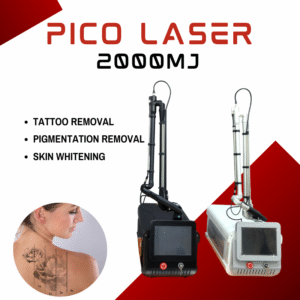
Picosecond and combined platforms use model-specific pulse durations and wavelength configurations for tattoo, pigment and selected skin-treatment workflows.
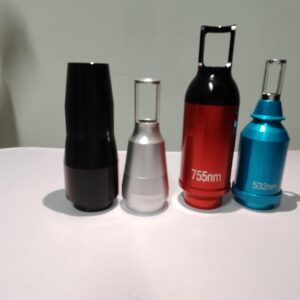
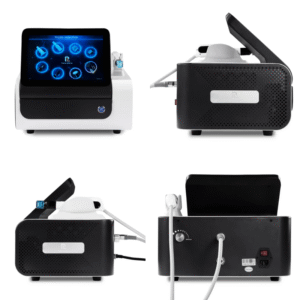
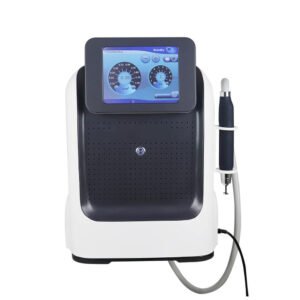
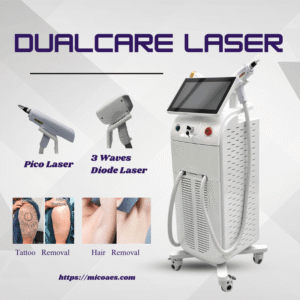
Compact systems may combine 532 nm, 785 nm and 1064 nm outputs, depending on the exact model and handpiece configuration.
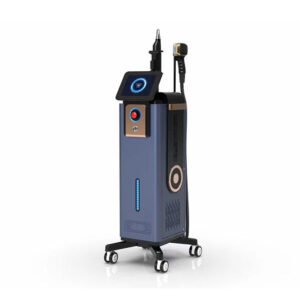
Combination systems may include tattoo, pigment, vascular or rejuvenation functions, but each mode must be verified independently.
| Parameter | Typical Options | Primary Role | Apa yang Harus Diverifikasi Pembeli |
|---|---|---|---|
| Durasi Pulsa | Nanoseconds or picoseconds | Controls how energy interacts with ink or melanin particles | Actual pulse range, pulse stability, energy range and spot-size relationship |
| 1064nm | Longer-wavelength Nd:YAG output | Commonly selected for black, dark blue and some deeper pigments | Fluence, beam profile, spot size, skin assessment and test-spot protocol |
| 532nm | Frequency-doubled Nd:YAG output | Commonly selected for red, orange and selected superficial pigments | Melanin absorption, pigment depth, skin tone, cooling and post-treatment care |
| 730 / 755 / 785 nm | Specialized or model-specific wavelength options | May support selected blue, green or difficult pigment applications | Exact wavelength, ink compatibility, pulse duration and manufacturer indication |
| Ukuran Tempat | Model-specific treatment diameter | Affects coverage, fluence and penetration characteristics | Available sizes, aiming beam, uniformity and treatment-area workflow |
| Pendinginan | Air, contact or external cooling | Supports comfort and helps manage thermal exposure | Cooling method, response time, maintenance and compatibility with the handpiece |
Penting: Pico and Q-Switched systems are not automatically superior to one another. Treatment response depends on ink composition, pigment depth, tattoo age, skin characteristics, pulse settings, wavelength selection and treatment intervals.
1064 nm Nd:YAG is commonly considered for darker pigments, subject to the exact device, fluence, spot size and client assessment.
532 nm may be selected for compatible colors, but melanin absorption and pigmentary risk must be assessed carefully.
Some difficult colors may require 730 nm, 755 nm, 785 nm or another device-specific wavelength rather than a standard 1064/532 nm setup.
Only treat lesions that have been appropriately assessed and are within the exact intended use of the selected device.
Color changes after acne or injury are not the same as tattoo ink and may require a different treatment plan and risk assessment.
Melasma can recur or worsen after energy-based treatment. Device selection and clinical supervision are especially important.
Menampilkan semua 12 hasilDiurutkan menurut popularitas
Confirm whether the platform provides nanosecond, picosecond or adjustable pulse modes and request the actual operating range.
Check which wavelengths are included, which are optional and which tattoo colors or pigment targets they are intended to address.
Compare the adjustable energy range, fluence definition, repetition rate and output consistency rather than relying only on maximum mJ claims.
Review available spot sizes, beam uniformity, aiming beam accuracy and how quickly the operator can change treatment areas.
Verify integrated or compatible cooling, maintenance requirements and the procedure used to protect the surrounding skin.
Confirm that the protocol includes consultation, test spots, sun-exposure screening and an appropriate plan for pigmentary risk.
Check wavelength-specific eyewear, controlled treatment-room access, warning labels, interlocks and laser-safety procedures.
Request operator training, parameter guidance, contraindications, maintenance instructions and model-specific compliance documents.
Compare laser-source coverage, handpiece support, calibration, replacement parts and technical assistance before ordering.
Laser tattoo removal is usually performed as a series of treatments separated by healing intervals. The number of sessions depends on tattoo size, ink color, ink density, depth, location, age, layering, the client’s immune response and the selected laser parameters.
Complete removal is not guaranteed. Some pigments may be resistant, and white, flesh-colored or cosmetic tattoo pigments may darken or respond unpredictably to laser energy.
Skin assessment: Recent tanning, photosensitizing medication, a history of abnormal pigmentation, active infection or an uncertain pigmented lesion should be reviewed before treatment.
Potential complications: Laser procedures may cause pain, redness, swelling, blistering, infection, scarring or temporary or persistent hypo- or hyperpigmentation.
Lesion screening: A pigmented lesion should not be treated cosmetically without appropriate clinical assessment. Laser treatment can alter or obscure features that require medical evaluation.
Klaim pemasaran: Avoid promising painless treatment, complete removal, no downtime, universal suitability or a fixed number of sessions.
Use consistent lighting, camera position, focus, treatment interval and image-processing settings when showing tattoo or pigmentation results. Identify the wavelength, pulse mode, number of sessions and follow-up period where appropriate.
Do not use images from another manufacturer or present one client’s result as a guaranteed outcome for every tattoo color or skin type.
Review available laser-operation training, parameter guidance and safety resources.
Check coverage for the laser source, handpiece, power supply, cooling system and control unit.
Learn about calibration, maintenance, troubleshooting and replacement-part support.
Need help comparing Q-Switched Nd:YAG, picosecond or multi-wavelength laser systems? Hubungi Mico AES with your target tattoo colors, pigmentation applications, destination country and required documentation.