
Ensuring optimal treatment outcomes while minimizing adverse reactions has always been a central challenge in medical aesthetics. Traditional high-fluence laser protocols are effective but frequently associated with complications such as post-inflammatory hyperpigmentation (PIH) and barrier disruption—especially in melanin-rich Asian skin types.
Low-Fluence, High-Spot-Size (LFHSS) laser technology offers a safer alternative by combining gentle thermal effects com precise pigment targeting. Today, this technique is widely applied in 1064 nm / 755 nm, nanossegundo e Picossegundo plataformas.
This article provides a comprehensive scientific and clinical overview of LFHSS: its origin, standardized definition, indication-specific parameters, treatment precautions, and contraindications—offering physicians a structured and evidence-based protocol.
1. Origin and Standard Definition
1.1 Historical Background
LFHSS can be traced back to the mid-2000s, when Korean dermatologists first applied large spot sizes and low fluence com Q-switched Nd:YAG 1064 nm nanosecond lasers for melasma management—coining the term Laser Toning.
The approach quickly gained global popularity and later inspired technologies such as “Whitening Toning,” “Carbon Peeling,” and other low-fluence programs.
With device evolution, LFHSS expanded to 755 nm nanosecond and picosecond lasers, enabling more precise pigment-selective treatment and significantly reduced risk of complications.
1.2 Standard Definition of LFHSS
LFHSS must meet all of the following technical criteria:
| Parâmetro | Standard Requirement |
|---|---|
| Tamanho do ponto | ≥ 6 mm |
| Fluence | ≤ 3 J/cm² |
| Treatment Endpoint | Mild warming or slight erythema |
Wavelength Characteristics
- 1064nm → deeper penetration; targets dermal pigment (melasma, Hori’s nevus, PIH)
- 755 nm → higher melanin absorption; ideal for epidermal pigment (freckles, epidermal melasma)
Duração do pulso
- Picosecond → photomechanical pigment fragmentation + skin rejuvenation
- Nanosecond → epidermal/dermal modulation and skin conditioning
2. Clinical Applications and Recommended Parameters
2.1 Pigmentary Disorders
(1) Melasma – 1064 nm Nanosecond Laser as Standard of Care
Recommended Parameters
- Tamanho do ponto: 6–8 mm
- Fluence: 1–3 J/cm²
- Freqüência: 5–10 Hz
- Interval: every 2–4 weeks
- Total sessions: ≤ 15 sessions
(Exceeding 15 sessions increases risk of mottled hypopigmentation.)
Mecanismo:
LFHSS applies “subcellular selective photothermolysis”—breaking melanosomes while preserving melanocyte viability, thereby reducing PIH and rebound pigmentation.

(2) Hori’s Nevus / Dermal Melanocytosis
First choice:
755 nm picosecond laser
→ stronger photomechanical fragmentation
→ lower risk of PIH
If using a 1064 nm nanosecond device:
- Tamanho do ponto: 6–8 mm
- Fluence: 1–3 J/cm²
- Freqüência: 5–10 Hz
- Interval: 2–4 semanas
2.2 Inflammatory & Degenerative Skin Conditions
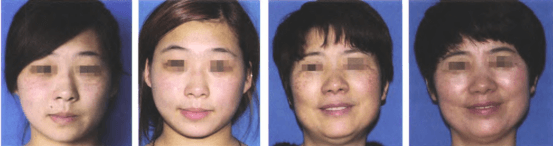
(1) Rosacea & Steroid-Induced Dermatitis
Recommended (1064 nm nanosecond “toning mode”)
- Tamanho do ponto: 6–8 mm
- Fluence: 0.3–1.5 J/cm²
- Interval: 4 weeks
Mecanismos:
- Modulates vascular reactivity
- Reduces inflammatory cytokines
- Accelerates barrier repair
- Improves flushing and sensitivity
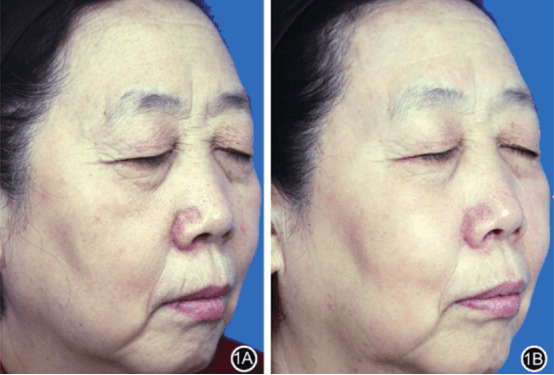
(2) Skin Rejuvenation (755 nm Picosecond + MLA Technology)
Recommended Parameters
- Tamanho do ponto: 6–8 mm
- Fluence: 0.5–1.0 J/cm²
- Freqüência: 5–10 Hz
- Interval: every 4 weeks
Benefícios:
- Collagen neogenesis
- Refinamento de textura e poros
- Fine lines reduction
- Tempo de inatividade mínimo
3. Treatment Precautions
3.1 Patch Test Protocol (Mandatory Step)
- Start with 1 J/cm², deliver 1–2 shots, observe for 5 minutes
- If purplish erythema or pain → decrease fluence by 0.2–0.5 J/cm²
- If minimal reaction → increase by 0.2–0.5 J/cm² (not exceeding 3 J/cm²)
- During full-face treatment, ensure the skin temperature stays below 40°C after 2–3 passes.
3.2 Preventing Excess Energy Accumulation
- Overlap rate: ≤ 10%
- Melasma: do not exceed 15 lifetime sessions
- Periocular & perioral areas: reduce fluence by 20%
- Always enable device cooling
(air cooling / contact cooling / cryogen depending on device)
4. Contraindications
4.1 High-Vascular-Density Lesions (Port-Wine Stain, Hemangioma)
1064/755 nm wavelengths have low hemoglobin absorption →
LFHSS fluence is insufficient to coagulate vessels →
May worsen vascular proliferation → Contraindicated
4.2 High-Density Tattoo Pigment
LFHSS fluence cannot reach the “instantaneous pigment explosion threshold” needed for tattoo removal.
- Leads to inadequate fragmentation
- Requires excessive sessions
- Increases inflammation and PIH
→ Use high-fluence Q-switched or picosecond protocols instead.
4.3 Hyperkeratotic Lesions (Seborrheic Keratosis, Warts)
LFHSS is não ablativo and relies mainly on photobiomodulation →
Cannot vaporize keratin →
May stimulate further hyperkeratosis → Contraindicated
Conclusão
LFHSS technology, based on large spot size and low fluence, provides a safer, gentler laser strategy across multiple wavelengths and pulse modes. It offers significant benefits in:
- Pigmentary disorders
- Inflammatory skin conditions
- Rejuvenescimento da pele
- Sensitive-skin management
However, clinicians should note:
- Clear clinical consensus currently exists only for melasma
- 15 sessions increases risk of mottled hypopigmentation
- Evidence for rosacea and rejuvenation requires more long-term RCTs
- Contraindications must be strictly followed
Future studies—especially multicenter randomized controlled trials—are essential to further define LFHSS treatment boundaries, optimize parameters, and elevate safety standards across medical aesthetic practice.
Mais blogs relacionados
Por que o laser fracionado de CO₂ ajuda na cura da remoção de tatuagens
O que são lasers Q-Switch e Yag para cuidados com a pele profissional?
ND q-switched: laser YAG para lesões pigmentadas: Tratando melasma, sardas e marcas de nascença
Quão eficaz é o laser nd: YAG para tratar o melasma?
Q-Switched Pico Laser: o guia completo para mecanismo e faixa de tratamento & Notas de segurança
Pico Laser vs CO₂ Laser – Qual é o melhor para remoção de tatuagens?
Laser Q-Switched: mecanismo, indicações, contra-indicações, parâmetros & Precauções
Q-Switch Laser Recuperação Tempo: O que esperar e como acelerar a cura
Portable Picoway picosecond Machine Operation
Qual é a melhor máquina a laser para remoção de tatuagem profissional em 2025?