
HIFU Facial Lifting Explained: Core Principles, Technology, and How It Really Works
HIFU, or High-Intensity Focused Ultrasound, has become one of the most talked-about non-surgical skin tightening treatments in aesthetic medicine. It is widely used for facial lifting, jawline tightening, and improving mild to moderate skin laxity without incisions or long downtime.
But while many people know HIFU as a “non-surgical facelift,” far fewer understand how it actually works. What kind of energy does it use? How deep does it go? Why can it tighten tissue without damaging the skin surface? And what does “focused ultrasound” really mean in clinical practice?
In this article, we will explain the core principles and technology behind HIFU facial lifting in a clear and professional way. This first blog in the series focuses on the scientific and technical foundation of HIFU, so patients can better understand the treatment and clinics can better educate their clients.
1. What Is HIFU?
HIFU stands for Ultrasonido enfocado de alta intensidad. It is a non-invasive aesthetic treatment that uses focused ultrasound energy to target specific layers beneath the skin. In facial rejuvenation, HIFU is commonly used to improve skin laxity, lift the brow area, tighten the jawline, and support overall facial contouring.
Unlike surgical facelift procedures, HIFU does not require cutting, stitching, or removing skin. Instead, it delivers energy into precise tissue depths to create controlled thermal coagulation points. These micro-injury points stimulate the body’s natural healing response and encourage collagen remodeling over time.
It is also important to distinguish therapeutic HIFU from diagnostic ultrasound. Standard ultrasound imaging is used to visualize tissue, while HIFU is designed to deliver concentrated energy for treatment. In aesthetic applications, that treatment goal is usually lifting, tightening, and collagen stimulation rather than imaging.
2. How Does HIFU Tighten the Skin?
HIFU tightens the skin by focusing ultrasound energy into deeper structural layers rather than treating only the skin surface. When this focused energy reaches the target depth, it generates heat in a highly controlled way. The temperature in the focal zone becomes high enough to create tiny thermal coagulation points within the tissue.
These controlled points trigger two important responses. First, there is an immediate contraction effect in the treated tissue. Second, the body begins a gradual repair process that stimulates new collagen formation and reorganizes existing collagen fibers. Over the following weeks and months, this remodeling process can improve firmness, support tissue lifting, and create a more defined facial contour.
Because the energy is concentrated below the skin surface, the epidermis usually remains intact when the treatment is performed correctly. That is one reason HIFU is often described as a non-invasive lifting technology with minimal downtime.
3. HIFU vs. Traditional Surgical Facelift
A traditional facelift is a procedimiento quirúrgico that removes excess skin and repositions deeper facial tissues. While surgical lifting can produce dramatic and long-lasting results, it involves anesthesia, incisions, and a recovery period that may last several weeks.
HIFU, by contrast, is a non-surgical treatment. It works by delivering focused ultrasound energy into specific tissue layers without cutting the skin.
Key differences include:
| Característica | HIFU | Surgical Facelift |
|---|---|---|
| Invasividad | No invasivo | Quirúrgico |
| Falta del tiempo | Mínimo | Weeks |
| Anesthesia | Usually not required | Required |
| Resultados | Gradual | Immediate |
| Longevidad | 1–2 years | 5–10 years |
HIFU is generally recommended for patients with la laxitud de piel suave a moderada who want a lifting effect without surgery. Surgical facelifts may still be more suitable for severe sagging or advanced aging.
4. What Is the Core Working Principle of HIFU?
The key principle behind HIFU is energy focusing.
Unlike many other aesthetic technologies that deliver energy across the skin surface, HIFU concentrates ultrasound waves at a specific point beneath the skin. This point is called the focal zone.
When ultrasound waves converge at this focal point:
- Energy density becomes very high
- Tissue temperature rises rapidly
- A micro thermal injury is created
Importantly, the surrounding tissues—especially the skin surface—receive much less energy. This allows the treatment to target deeper layers while minimizing damage to the epidermis.
This focused delivery is what makes HIFU both precise and effective for lifting treatments.
5.Mechanism of Micro-Focused Ultrasound
(1) Energy Source: Ultrasound
HIFU lifting devices use Ultrasonido Focalizado de Alta Intensidad (HIFU) as their energy source, which is high-frequency ultrasound.
However, the energy used for non-invasive anti-aging treatments es much lower than the energy used in surgical HIFU for cutting tissue.
Therefore, the more accurate academic term is:
Micro-Focused Ultrasound (MFU).
The US FDA-approved Ultherapy system includes real-time ultrasound visualization, so its academic name is:
Micro-Focused Ultrasound with Visualization (MFU-V).
The frequencies used by Ultherapy include:
- 4 MHz
- 7 MHz
- 10 MHz
Among them:
- 7 MHz and 10 MHz lose energy rapidly in tissue because molecular friction and scattering occur more frequently.
Therefore they can only treat superficial skin layers, como 1.5 mm or 3.0 mm depths. - 4 MHz attenuates more slowly in tissue and can penetrar más profundo, reaching layers such as the 4.5 mm SMAS fascia layer.
(2) Ultrasound Focusing Principle
The principle is similar to using a magnifying glass to focus sunlight.
El transducer emits high-frequency ultrasound waves and focuses energy precisely at a specific depth beneath the skin.
This is called geometric focusing.
As ultrasound passes through the epidermis and superficial dermis, the energy remains dispersed.
Therefore, the heat per unit area is insufficient to cause tissue damage.
Only at the geometric focal point does the energy density suddenly reach its maximum peak.
(3) Ultrasound Heat Generation
When ultrasound waves travel through tissue, they cause high-frequency oscillation of tissue molecules, vibrating millions of times per second.
This produces instant heat.
Due to intense molecular friction, acoustic energy converts into thermal energy, raising the temperature at the focal point rapidly to 60°C–70°C within milliseconds.
(4) Transducer
The most critical component of the ultrasound treatment probe is the transducer.
Its function is to convert electrical energy into ultrasound (mechanical vibration energy).
The working mechanism relies on the inverse piezoelectric effect.
Proceso
Inside the transducer are piezoelectric ceramic crystals.
When high-frequency alternating current is applied:
- the crystals expand and contract rapidly according to the electrical frequency.
Resultado
This rapid mechanical vibration pushes the surrounding medium (such as coupling gel and skin tissue) to form longitudinal pressure waves, which we call ondas de ultrasonido.
(5) Thermal Coagulation Points
Focused ultrasound produces instant temperatures of 60–70°C at specific depths in the skin.
This heat creates thermal coagulation points (TCPs) approximately 1 mm in size.
These points are surrounded by healthy tissue, forming a fractional pattern of controlled micro-injuries.
Inside each TCP:
- Collagen fibers undergo thermal denaturation
- Colágeno contracts immediately
This produces an instant tightening and lifting effect.
Both thermal denaturation and coagulation trigger the body’s wound healing response, conduciendo a months of collagen and elastin regeneration.
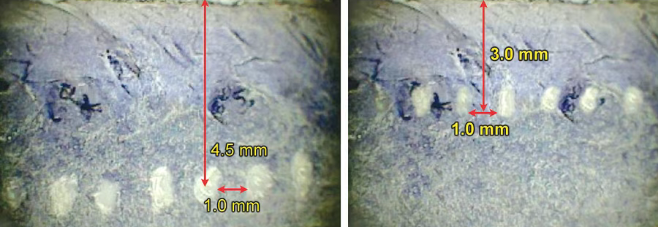
Histologically:
- TCPs appear as white round regions under the microscope.
- In reality, they are wedge-shaped, not perfectly round.
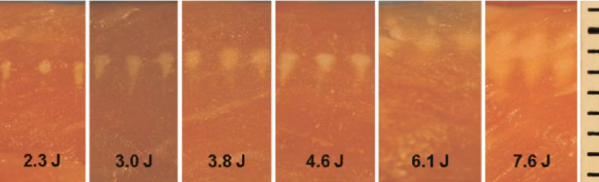
(6) Wound Healing Response: New Collagen and Elastin Formation
Thermal coagulation points initiate three biological repair phases.
1. Inflammatory Phase
Duration: Immediately after treatment up to about 70 days.
When tissue reaches the collagen denaturation temperature (60–70°C):
- significant inflammation occurs
- macrophages remove damaged tissue
- cytokines recruit fibroblasts
Fibroblasts then begin producing new collagen.
2. Proliferation Phase
This phase may overlap with inflammation and begins within hours after treatment.
Fibroblasts synthesize:
- Type III collagen
- Elastin
- Fibronectin
- Glycosaminoglycans
- Other matrix components
These substances rebuild the extracellular collagen matrix.
3. Remodeling Phase
This stage usually begins around 3 semanas después del tratamiento and can last up to one year.
Durante esta fase:
- Type III collagen gradually converts into Type I collagen
- Collagen fibers form stronger cross-linking structures
This remodeling process is the key to long-term skin tightening and lifting.
4.1. Mechanism of Chinese “Ultraformer-type” HIFU Devices
El Ultraformer-type cartridges of Chinese devices function similarly to those of the US Ultherapy system.
Difference Between 2D hifu Head and Ultraformer-type Head
HIFU 2D y MPT HIFU (Micro-Pulse Technology HIFU) refer to different energy delivery methods and treatment modes in micro-focused ultrasound devices. The distinction mainly lies in how ultrasound energy is emitted and how heat accumulates in tissue.
Below is a clear technical comparison.
2D HIFU vs MPT HIFU
| Parámetro | HIFU 2D | HIFU MPT |
|---|---|---|
| Energy emission | Single pulse or traditional pulse | Multiple micro-pulses |
| Entrega de energía | One strong pulse per point/line | Energy divided into many small pulses |
| Thermal formation | Instant high-temperature coagulation point | Gradual heat accumulation |
| Temperature peak | Higher instantaneous temperature | Lower instantaneous temperature |
| nivel de dolor | Más alto | Más bajo |
| Tissue damage | More concentrated | More controlled |
| Seguridad | Moderado | Más alto |
| Treatment comfort | Moderado | Más alto |
| Velocidad de tratamiento | Normal | Usually faster with continuous scanning |
| Technology generation | Hifu tradicional | Newer generation technology |
2D HIFU (Traditional HIFU)
Principio de funcionamiento
2D HIFU usually uses single pulse energy to create thermal coagulation points (TCPs) en la piel.
Energy is released once per shot, creating a focused point that quickly reaches: ~60–70°C
This causes:
- contracción de colágeno
- desnaturalización del colágeno
- SMAS tightening
Características
Ventajas
- Strong lifting effect
- Penetración profunda
- Clear TCP formation
Desventajas
- Higher pain
- Higher nerve irritation risk
- Heat concentration at one point
2. MPT HIFU (Micro Pulse Technology)
MPT stands for Micro Pulse Technology.
Instead of delivering one large pulse, the system splits energy into multiple micro-pulses.
Example:
Traditional pulse
1 pulse = 25–50 ms
MPT pulse
1 pulse = multiple sub-pulses
each ≤5 ms
These micro-pulses are released in rapid sequence, allowing heat to accumulate gradually.
How MPT changes the heating process
Hifu tradicional
Energy → instant heat spike → TCP
HIFU MPT
micro pulse
micro pulse
micro pulse
heat accumulation → TCP
Resultado:
- smoother heating
- less nerve stimulation
- improved comfort
Thermal Effect Comparison
| Factor | Hifu tradicional | HIFU MPT |
|---|---|---|
| Heating pattern | Instant spike | Gradual build-up |
| Tissue response | Strong thermal shock | Controlled thermal stimulation |
| Pain sensation | Sharp pain | Sensación de calentamiento leve |
| Safety margin | Smaller | Más grande |
Clinical Effect Comparison
| Treatment goal | HIFU 2D | HIFU MPT |
|---|---|---|
| SMAS lifting | Fuerte | Fuerte |
| Estiramiento de la piel | Bien | Bien |
| Comodidad | Medio | Alto |
| Falta del tiempo | Mínimo | Mínimo |
| Risk of nerve irritation | Más alto | Más bajo |
Why many new HIFU machines use MPT
Modern HIFU devices adopt MPT because it:
- reduces pain significantly
- improves safety
- maintains lifting effect
- improves patient tolerance
This is particularly important for:
- full face treatment
- sensitive patients
- sliding treatment modes
Simple analogy
Hifu tradicional
→ Hammer strike
HIFU MPT
→ Many small taps building heat
Both can produce the same thermal effect, but the second is more controlled and comfortable.
💡 Importante:
MPT is not a different ultrasound technology, it is simply a different pulse delivery method within micro-focused ultrasound systems.
5. Does HIFU Work Through Thermal Effect or Mechanical Effect?
In aesthetic medicine, the primary mechanism of HIFU is thermal effect.
When ultrasound energy converges at the focal point, the tissue temperature can reach approximately 60–70°C. At this temperature range, proteins begin to denature and small areas of controlled thermal coagulation are formed.
These thermal coagulation points stimulate the body’s natural healing response, which leads to:
- Contracción de colágeno
- Fibroblast activation
- New collagen production
Although ultrasound waves can also produce mechanical effects such as acoustic vibration and cavitation, these effects play a much smaller role in cosmetic skin tightening compared with the thermal effect.
For facial lifting treatments, controlled heat generation is the most clinically important mechanism.
6. How Is HIFU Energy Measured?
HIFU treatment parameters are often described using several different measurements rather than a single energy number.
Common parameters include:
- Energy per shot (often expressed in joules)
- Shot count
- Line length
- Spacing between shots
- Total treatment lines
Together, these parameters determine how much energy is delivered into the tissue.
For example, two treatments might use the same energy per shot but differ greatly in total treatment intensity depending on how many lines and shots are applied.
It is also important to understand that higher energy does not always mean better results. Excessively high energy can increase discomfort and risk without improving lifting outcomes. Proper parameter balance is essential for both safety and effectiveness.
6.1 Sliding Operation and Volumetric Heating
Unlike the stamping method used by the knife head, the MPT HIFU head slides across the skin continuously.
It releases high-frequency pulses repeatedly, allowing heat to accumulate gradually in deeper tissues.
This sliding motion transforms treatment coverage:
from points → to surfaces
Heat becomes more evenly distributed in target layers such as:
- dermis
- fat layer
- fascia layer
Ventajas:
- reduced overheating risk
- significantly reduced pain
6.2 Typical Clinical Operation
Usually:
- 2D hifu head is used first
→ precise lifting of key areas
(jawline, lower cheek, apple cheek support) - MPT hifu head is then used
→ sliding across the entire face
→ enhancing collagen contraction and fat tightening
7. How Is HIFU Treatment Depth Controlled?
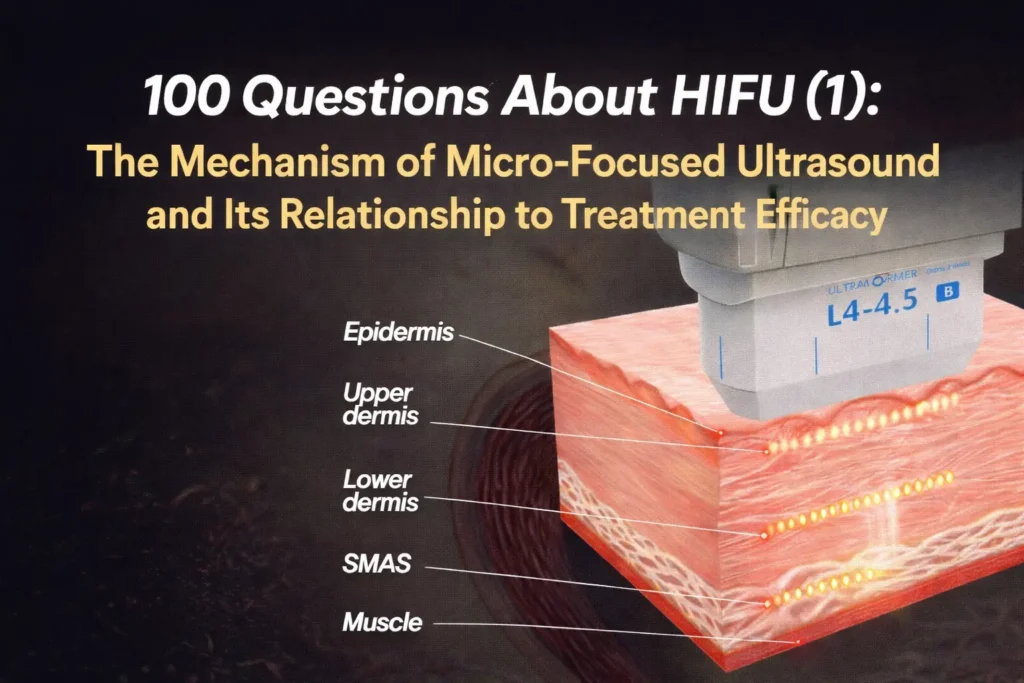
One of the most important aspects of HIFU technology is the ability to treat different tissue depths. This is achieved through interchangeable treatment heads known as cartridges or transducers.
Each cartridge is designed to focus ultrasound energy at a specific depth below the skin surface.
Common facial treatment depths include:
| Profundidad del cartucho | Capa objetivo |
|---|---|
| 1,5 milímetros | dermis superficial |
| 3.0 mm | Deep dermis |
| 4,5 milímetros | capa SMAS |
El SMAS (Superficial Musculoaponeurotic System) is the structural layer targeted in many surgical facelifts. By delivering energy to this layer, HIFU can produce lifting effects without surgery.
Selecting the correct depth is essential for achieving optimal results.
8. What Is Focal Depth?
Focal depth refers to the exact depth at which ultrasound energy converges inside the tissue.
This depth is determined by the design of the treatment cartridge. When the device emits ultrasound waves, they travel through the skin and converge at a predetermined focal point.
At this focal point:
- Energy concentration is highest
- Heat generation occurs
- Thermal coagulation points are formed
Because the energy is focused at a specific depth rather than the surface, the treatment can target structural layers beneath the skin while minimizing superficial damage.
Understanding focal depth is crucial for clinicians because incorrect depth selection may reduce effectiveness or increase the risk of side effects.
8.1. Relationship Between Mechanism and Clinical Efficacy
The fundamental principle of ultrasound lifting is: controlled thermal injury in target tissue layers.
In theory: Higher temperatures within a safe range produce stronger lifting effects.
However, excessive temperature can cause:
- excessive tissue damage
- poor healing
- fibrosis
- severe pain
- higher nerve injury risk
Therefore:
- Ultherapy (US system)
temperature: 65–70°C
→ theoretically stronger effect - Chinese HIFU systems
temperature: around 60°C
→ theoretically safer
9. Will HIFU Damage the Surface of the Skin?
When performed correctly, HIFU generally does not damage the skin surface.
This is because the ultrasound energy passes through the superficial layers with relatively low energy density and only concentrates at the focal point below the skin.
Several factors help protect the skin surface:
- Precise energy focusing
- Controlled pulse duration
- Proper coupling gel
- Correct device settings
However, improper technique—such as excessive energy, poor contact, or incorrect treatment mapping—may increase the risk of burns or discomfort. For this reason, operator training and device quality are important considerations.
9.1 Fractional Pattern of HIFU Treatment
HIFU treatment essentially uses a fractional pattern, similar to:
- fractional lasers
- microagujas por radiofrecuencia
Each ultrasound line:
- length: 25 mm
- contains 17–25 TCPs
- TCP diameter: 0.5–1 mm
- spacing: 1.1–1.5 mm
- maximum adjustable spacing: 2 milímetros
Healthy tissue remains between points, acting as biological support zones to accelerate healing and collagen regeneration.
Without these gaps, treatment would resemble large-area burns, leading to necrosis or scarring.
9.2. Key Operating HIFU Principles
A. Full Contact (Prevent Misfire / Burns)
The treatment probe must maintain complete contact with the skin.
Reason:
Air gaps cause ultrasound reflection, shifting energy to the surface and causing epidermal burns or blisters.
Operation:
- apply sufficient ultrasound coupling gel
- maintain stable vertical pressure
B. Avoid Overlapping Shots (Prevent Heat Accumulation)
Never fire repeatedly at the same position in a short time.
Reason:
Independent thermal points may merge into sheet-like burns, causing:
- severe pain
- nerve damage
- fat destruction
Operation:
Maintain at least 1 mm spacing between lines.
9.3. Technical Innovations in the Peninsula “Super HIFU”
To balance eficacia y seguridad, Peninsula devices control TCP temperature at about 60 ° C.
This is lower than Ultherapy.
To maintain efficacy, they introduced dual focal technology.
Comfort Micro-Pulse Technology
Instead of one large pulse, energy is divided into multiple micro-pulses.
Pulse width comparison:
- Ultherapy: 25–50 ms
- Peninsula Gen-2: ≤20 ms
- Latest Super HIFU: ≤5 ms sub-pulses
Ventajas:
- improved comfort
- improved safety
10. How Does HIFU Stimulate Collagen Regeneration?
Collagen regeneration is one of the key reasons HIFU produces gradual skin tightening.
When thermal coagulation points are created in the tissue, the body recognizes them as controlled micro-injuries. This activates a wound-healing response involving several biological processes:
- Fibroblast activation
Fibroblasts begin producing new collagen fibers. - Collagen remodeling
Existing collagen structures reorganize and tighten. - Neocollagenesis
New collagen gradually replaces older or weakened fibers.
This process takes time. While some tightening may be noticeable shortly after treatment due to immediate collagen contraction, the most visible improvements typically occur over 2–3 months as collagen remodeling progresses.
Key Technical Concepts Patients Should Understand
For patients considering HIFU treatment, understanding a few basic technical terms can help set realistic expectations.
Important concepts include:
Profundidad del tratamiento
Determines which tissue layer is targeted.
Nivel de energía
Controls the strength of each ultrasound shot.
Shot count
Refers to the total number of energy pulses delivered.
Treatment mapping
The pattern used by the practitioner to cover the face evenly.
Operator experience
Proper technique significantly affects both safety and results.
When these factors are optimized together, HIFU can provide noticeable skin tightening with minimal downtime.
Conclusión
HIFU has become one of the most widely used non-surgical technologies for facial lifting and skin tightening. Its effectiveness lies in the unique ability to focus ultrasound energy at precise depths, generating controlled thermal effects that stimulate collagen remodeling without damaging the skin surface.
Understanding how HIFU works—from focal depth and energy delivery to collagen regeneration—helps patients make more informed decisions and helps practitioners perform treatments more safely and effectively.
En el próximo artículo de esta serie, exploraremos who is the best candidate for HIFU, what results to expect, and which facial concerns it can improve.