
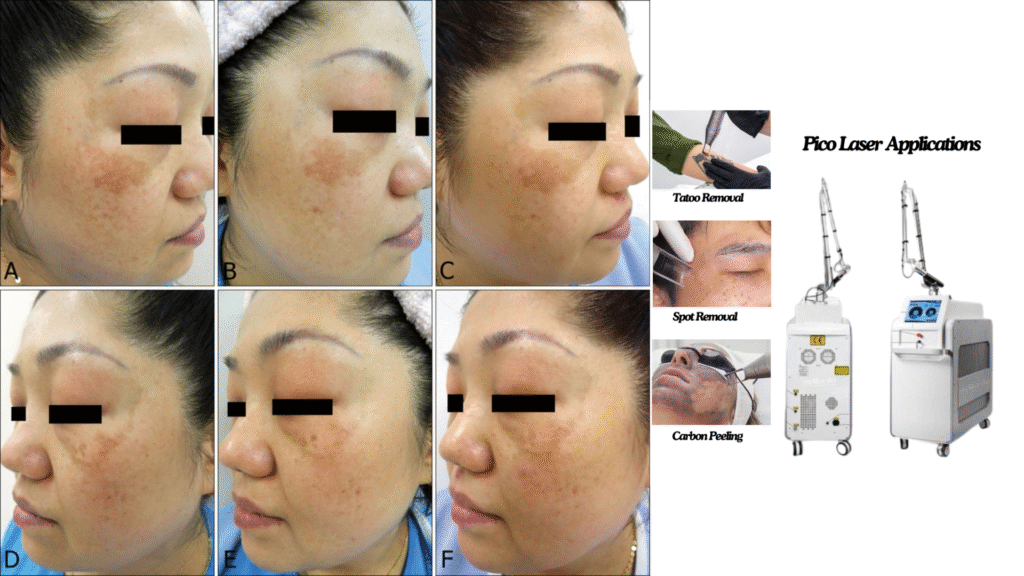
Melasma is a common pigmentary disorder that causes brown or gray-brown patches, often on the face. It is notoriously difficult to treat due to its recurrent nature and deep dermal pigmentation. Among the many treatment options available, the Admoussé Q: laser YAG has emerged as a popular non-invasive method for melasma management. But how effective is it really?
In this blog, we will explore the scientific principles behind the Q-switched Nd:YAG laser, its clinical efficacy, treatment protocols, potential side effects, and what both practitioners and patients can expect from this technology.
1. Understanding Melasma: Causes and Challenges
Melasma is triggered by a combination of factors such as:
- Exposition aux UV
- Hormonal fluctuations (e.g., pregnancy, oral contraceptives)
- Genetic predisposition
- Inflammatory responses or skincare products
Melasma involves both epidermal et dermal pigmentation, making it resistant to topical treatments alone. This is why energy-based devices like lasers are being increasingly considered.
2. What is a Q-switched Nd:YAG Laser?
Le Q-switched Nd:YAG (Neodymium-doped Yttrium Aluminum Garnet) laser emits light at 1064 nm et 532 nm wavelengths. It delivers short, high-intensity pulses in nanoseconds, ideal for targeting melanin without damaging surrounding tissue.
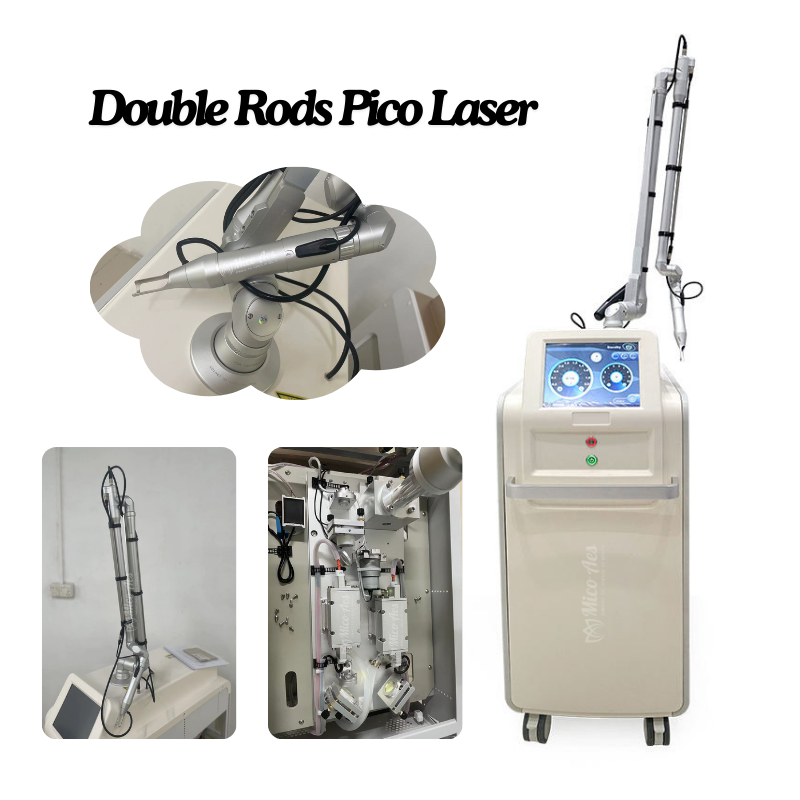
Principales caractéristiques :
- Longueur d'onde de 1064 nm penetrates deeper for dermal pigmentation.
- 532 nm wavelength targets superficial pigmentation.
- Photoacoustic effect breaks down pigment clusters into smaller fragments.
- Minimal thermal effect = lower risk of post-inflammatory hyperpigmentation (PIH).
3. Clinical Effectiveness for Melasma
✅ Scientific Studies & Data
Multiple clinical studies support the use of low-fluence Q-switched Nd:YAG lasers for melasma:
- A 12-week study in the Journal of Cosmetic and Laser Therapy showed significant pigment reduction in 70% of patients after 6–8 sessions.
- A Korean study found that combining the laser with topical agents (e.g., hydroquinone) improves long-term outcomes and reduces recurrence.
- Studies show that low-fluence Q-switched Nd:YAG laser treatment significantly reduces melasma severity. For example, the mean modified melasma area severity index (mMASI) score decreased from 6.7 ± 3.3 to 3.2 ± 1.6 after treatment, with about 59% of patients reporting at least a 50% reduction in melasma severity.
- Another study reported a 62% reduction in mMASI scores after five treatment sessions, with over 50% of patients experiencing higher lesion clearance compared to baseline.
- Patient satisfaction is generally good, with around 70% rating the laser treatment as meeting their expectations
✅ Treatment Expectations
- Sessions required: 6 to 10 treatments, spaced 1 to 2 weeks apart.
- Entretien: Ongoing sun protection and possible touch-up sessions every 3–6 months.
- The treatment is generally safe with no permanent adverse effects reported in many studies.
- Post-treatment erythema and mild pain are common but usually transient. Newer dual-pulse modes like Q-PTP reduce procedural pain and skin erythema compared to single-pulse modes, improving patient comfort without compromising efficacy.
- Despite initial improvement, melasma recurrence rates after Q-switched Nd:YAG laser treatment can be high. Recurrence was observed in 58.8% of patients one year after treatment in one study, and another reported an 81% recurrence rate.
4. Advantages Over Other Treatments
| Traitement | Pros | Inconvénients |
|---|---|---|
| Q-switched Nd:YAG Laser | Non-invasive, precise, minimal downtime | Multiple sessions needed, potential recurrence |
| Peelings chimiques | Affordable, effective for epidermal melasma | Risk of irritation and PIH |
| Topical Agents | Safe, easily accessible | Slow results, less effective for dermal pigmentation |
| Fractional Lasers | Deep action, good for mixed melasma | Higher risk of downtime and hyperpigmentation |
The Q-switched laser strikes a balance between Efficacité et sécurité, especially for Fitzpatrick skin types III–V, where traditional lasers may increase pigment risks.
5. Risks and Considerations
Despite its popularity, the Q-switched Nd:YAG laser isn’t without limitations:
- Overtreatment can lead to hypopigmentation or rebound melasma.
- Inexperienced use may cause thermal damage.
- Not a cure: Melasma is chronic; laser therapy manages symptoms, not root causes.
Best Practices:
- Utiliser low fluence protocoles.
- Se combiner avec topical depigmenting agents.
- Ensure rigorous sun protection post-traitement.
6. Real-World Feedback and Case Study
✨ Case Study: 35-year-old Asian Woman (Fitzpatrick IV)
- Before: Deep brown patches on cheeks and upper lip.
- Treatment: 8 sessions with low-fluence Q-switched 1064 nm laser.
- After 8 weeks: 60–70% pigment clearance, improved skin tone, no PIH.
“The patches have faded significantly. I finally feel comfortable going out without makeup!”
This real-world example echoes the results of clinical research: consistent, controlled treatments yield visible and satisfying results.
Conclusion
Le Admoussé Q: laser YAG is a safe and scientifically backed option for managing melasma, especially when used with a comprehensive treatment protocol. It is not a one-time fix, but with experienced application, proper patient selection, et post-care diligence, it can provide long-lasting pigment reduction and renewed skin confidence.
Whether you’re a skincare professional or an individual exploring solutions for melasma, this laser technology deserves a spot on your radar.