Choosing RF microneedling equipment starts with understanding what its settings actually mean. Needle depth, RF output, pulse timing, and delivery mode all contribute to treatment performance—but a higher number on the screen does not automatically mean a better treatment.
For practitioners, understanding Morpheus8 treatment parameters helps make sense of manufacturer documentation and clinical research. For clinic owners, it also helps answer a commercial question: which equipment offers the right capabilities, operating costs, and support for your planned services?
This guide explains the main parameters, separates InMode platform versions from needle-tip types, and shows what to request before investing in an RF microneedling system.
Nøgle takeaways
Compare the complete ownership cost. Cartridges, training, maintenance, and service availability belong in the purchasing decision.
Identify the exact equipment first. Morpheus8 is an InMode product family; other manufacturers’ machines need their own technical and regulatory evaluation.
Read settings together. Depth, output, pulse characteristics, and delivery mode influence the treatment.
Check the units. Watts, joules, and manufacturer-defined screen levels are different quantities.
Separate capability from treatment recommendations. Maximum needle depth is not the appropriate depth for every patient or treatment area.

What Are Morpheus8 Treatment Parameters?
Morpheus8 treatment parameters describe the controls used to deliver fractional RF energy through microneedles.
The main categories are:
| Parameter | What It Describes | Hvorfor det betyder noget |
|---|---|---|
| Nåle dybde | Programmed needle insertion depth | Helps define where the electrode needles are positioned |
| RF udgang | Power, energy or a manufacturer-defined setting | Describes an aspect of electrical delivery |
| Pulse duration and timing | How long and when RF is delivered | Contributes to thermal exposure |
| Delivery mode | How insertion and RF delivery are sequenced | Determines the available treatment pattern |
| Cartridge configuration | Pin count, geometry, insulation and compatibility | Influences energy distribution and equipment requirements |
| Behandlingsdækning | Passes, overlap and repeated exposure | Affects cumulative treatment |
These settings form a system. A depth number without the device, cartridge, and RF delivery details gives an incomplete picture.
Morpheus8 vs. Other RF Microneedling Machines
Morpheus8 refers to InMode’s RF microneedling product family. Its official portfolio includes different applicators, tips and platform generations. [1]
Other manufacturers also supply RF microneedling equipment with features such as adjustable depth, interchangeable cartridges and selectable delivery modes. Those features should be evaluated on their own merits.
Fordele:
- Velegnet til alle hudtyper (Fitzpatrick I–VI)
- Minimal nedetid and non-surgical
- Fremragende til hudopstramning, Rynkereduktion, scar improvement, og fat remodeling.
🔬 Penetration Depth & Areas of Application
The device can penetrate up to 7 mm into the skin – especially with the body applicator for targeted RF delivery into subcutaneous fat.
For facial treatments, the recommended depth is up to 4 mm, adapted to more sensitive skin areas.
Burst Mode – Multi-Layer Energy Delivery
In Burst Mode, RF energy is automatically delivered at multiple skin depths in a single cycle. The needles stop every 2 mm during retraction to deliver energy at that depth.
Set Needle Depth Actual RF Delivery
7 mm 7 mm → 5 mm → 3 mm
6 mm 6 mm → 4 mm → 2 mm
5 mm 5 mm → 3 mm
4 mm 4 mm → 2 mm
3 mm / 2 mm Single Energy Delivery (No Burst Mode)
Hvordan det fungerer:
Morpheus8 delivers RF energy through microneedles, creating tiny channels in the skin while heating the underlying dermis. This process stimulates collagen and elastin production, leading to skin regeneration, tightening, and enhanced texture.
Behandlingsområder:
Morpheus8 can be used on multiple areas of the body, including the face, neck, abdomen, arms, thighs, buttocks, chest, and back. It is particularly effective for:
- Loose or sagging skin
- Fine linjer og rynker
- Acne ar
- Strækmærker
- Dobbelt hage
- Forstørrede porer
- Small treatment zones like the hands og periorbital (around the eyes) area
Expected Results:
Morpheus8 offers significant improvements in skin firmness, wrinkle reduction, skin texture, scar fading, and subcutaneous fat reduction. It provides comprehensive rejuvenation effects and has a lower risk of post-inflammatory hyperpigmentation (PIH) compared to other treatments—making it a safer option for darker skin tones.
Suitable Candidates:
Morpheus8 is safe for alle hudtyper, including dry, oily, combination, and normal skin. However, it is ikke anbefalet for:
- Pregnant or breastfeeding individuals
- Patients with active skin infections or conditions (e.g., eczema, herpes outbreaks)
- People with pacemakers or metallic implants in the treatment area
- Those with cancer, uncontrolled diabetes, thyroid disease, epilepsy, or keloid scarring tendencies
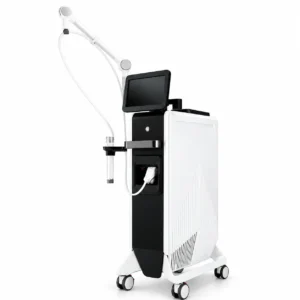
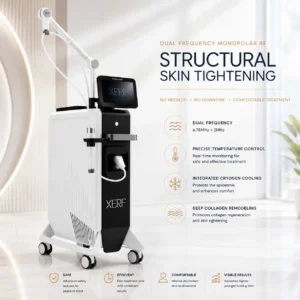
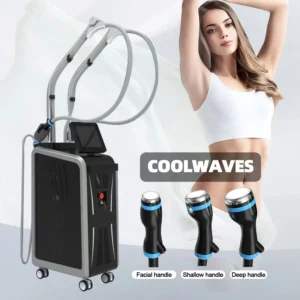
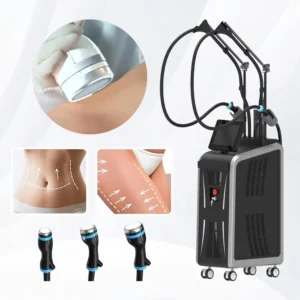
Similar appearance does not establish identical output, cartridge compatibility, or clinical performance.
When exploring professional RF microneedling systems, begin with three questions:
- Who manufactured the exact model?
- What do its settings and specifications mean?
- What documentation and support are available for that equipment?
This approach makes comparisons more useful than relying on a familiar product name alone.
Needle Depth: What the Number Actually Tells You
Needle depth is generally expressed in millimeters. It describes the specified or programmed insertion depth for a compatible cartridge.
It does ikke, by itself, describe the complete heated tissue volume or establish the correct setting for a treatment area.
Maximum Depth vs. Selected Treatment Depth
A maximum depth is an equipment capability. The treatment depth selected for a patient depends on anatomy, clinical assessment, the intended procedure and the applicable manufacturer instructions.
For buyers, a useful specification should identify:
- The compatible applicator and cartridge.
- Available depth settings.
- Whether the range changes by mode.
- Which hardware or software version the specification describes.
- The manufacturer’s intended uses and operating instructions.
A clear, documented range is more valuable than an impressive maximum without supporting detail.
Treatment Process:
A consultation and skin evaluation are required before treatment. During the session, a topical anesthetic or nerve block is used for pain relief. Post-treatment, patients may experience mild redness, swelling, or dryness, which typically resolves within a few days.
For optimal results, 3–4 sessions spaced 4–6 weeks apart are usually recommended.
Safety Profile:
Morpheus8 is a minimalt invasiv treatment with a short recovery time and low skin irritation. However, improper use or excessive energy application may lead to PIH or scarring. It’s crucial to undergo treatment from an experienced and certified practitioner.
Morpheus8 is a safe, effective, and versatile solution for addressing a variety of skin concerns and body areas. Individual treatment plans should be tailored by a qualified provider based on personal skin condition and goals.
Morpheus8 Versions and Tips: A Practical Comparison
Platform generations, applicators and cartridges should be compared separately.
Platform and Applicator Versions
The following summarizes descriptions on InMode’s published portfolio page. These are equipment capabilities, not anatomical treatment recommendations. [1]
| Version | Portfolio Distinction | Published Maximum Depth Description |
|---|---|---|
| Original Morpheus8 | Original fractional RF applicator | Up to 4 mm |
| Morpheus8 Burst | Newer facial configuration with multi-depth delivery controls | Up to 5 mm |
| Morpheus8 Body 3D | Body-oriented configuration with a 40-needle array | Up to 7 mm |
| Morpheus8 Burst Deep | Body-oriented Burst configuration with layer-specific energy controls | Up to 7 mm |
Needle-Tip Types
The same portfolio describes Prime as a compact 12-needle tip adjustable up to 4 mm and Resurfacing as a 24-needle tip with a fixed 0.5 mm needle length. Compatibility and available settings should be checked against the exact system. [1]
The purchasing lesson is straightforward: ask for the cartridge list that belongs to the machine being quoted, rather than combining specifications from several generations into one comparison.
RF Power, Energy and Screen Levels Explained
Power and energy are related, but they are not interchangeable.
Watts Measure Power
A watt describes the rate of energy delivery.
Before comparing wattage claims, establish whether the figure represents:
- Electrical input to the equipment.
- RF output under specified conditions.
- Maximum rated output.
- A selectable treatment setting.
A whole-system power rating does not establish the RF delivered during a treatment pulse.
Joules Measure Energy
For constant power:
Energy in joules = power in watts × time in seconds
Actual device delivery may involve pulses, feedback control or multiple stages. The manufacturer’s documentation is needed to interpret that behavior.
Screen Levels Need a Definition
A screen setting labeled “Level 30” should not automatically be read as 30 watts or 30 joules.
| Display or Specification | Question to Ask |
|---|---|
| “300 W maximum” | What exactly is being rated, and under what conditions? |
| “Energy level 30” | What does this level control? |
| “Adjustable pulse” | What is the documented adjustment range? |
| “Impedance feedback” | What is measured, and how does the system respond? |
| “Multi-depth mode” | Which depths and output controls are available? |
The strongest equipment proposal explains its numbers clearly. That clarity helps clinics compare systems, train operators, and communicate accurately with patients.
Types of Treatments Supported by Morpheus8
Morpheus8 supports a wide range of clinical applications, including but not limited to the following:
1. Facial and Body Skin Tightening & Ombygning
By combining RF energy and microneedling, Morpheus8 stimulates collagen and elastin production, helping reduce:
- Slaphed
- Rynker
- Acne ar
- Strækmærker
2. Acne and Acne Scar Treatment
Clinical studies have shown Morpheus8 to be highly effective in reducing:
- Inflammatory acne lesions
- Forstørrede porer
- Textural irregularities
- Rolling, boxcar, and ice-pick acne scars
3. Rosacea (Redness) Treatment
Morpheus8 has shown promising results in treating rosacea by downregulating inflammatory mediators and vascular activity, leading to improved redness and skin tone.
4. Melasma Management
Although clinical data is limited, combining Morpheus8 with IPL has been found effective in improving melasma pigmentation without worsening the condition.
5. Safe for Darker Skin Tones
Morpheus8 is one of the few RF-based treatments proven to be safe for darker skin tones (Fitzpatrick types IV–VI). It improves skin laxity, tone, acne, and post-acne scarring without triggering pigmentary complications or scarring.
6. Fat Reduction & Kropskonturering
De Morpheus8 Body tip with 40 needles allows penetration up to 8mm, enabling significant subdermal remodeling of fat and tissue—ideal for areas like the abdomen, thighs, and buttocks.
7. Vaginal Rejuvenation
De Morpheus8V applicator is designed for vaginal tightening and regeneration, and may help improve vaginal laxity and urinary incontinence.
8. Combination Therapy
Morpheus8 can be safely combined with other aesthetic treatments, such as:
- Kemisk peeling
- Injectable fillers
- Intens Pulsed Light (IPL)
This enhances the overall rejuvenation outcome and allows for a more comprehensive approach to skincare.
9. Customizable Protocols
Morpheus8 allows for tailored treatment plans, adapting the needle configuration and energy levels to meet the unique needs of each patient.
Parameters Recommended for Each Treatments of Morpheus8
In Morpheus8 treatment types, the recommended energy settings for each treatment vary depending on the device model and the treatment goals.

| Tip Name | Pins | Depth Range (mm) | RF Energy Levels(300w Max) | Cycle Mode | Fixed Mode |
| 40 Pin Needle | 40 | 2, 3, 4, 5, 6, 7 | 40-80W | Ja | Ja |
| 24 Pin Needle | 24 | 1, 2, 3, 4, 5, 6, 7 | 40-80W (1mm depth: 20–40W) | Ja | Ja |
| 12 Pin Needle | 12 | 1, 2, 3, 4 | 40-80W (1mm depth: 20–40W) | Ja | Ja |
Energy Adjustment Strategy in Morpheus8 Treatments
During Morpheus8 treatments, energy levels are typically adjusted gradually from low to high. This incremental approach ensures both treatment safety and effectiveness. For sensitive areas or thin skin, lower energy levels are recommended to minimize discomfort or side effects. Conversely, for deeper tissue treatments, higher energy levels may be required to achieve optimal results.

Morpheus8 Recommended Energy Settings by Device Type and Treatment Depth
The recommended energy settings for Morpheus8 treatments vary depending on the device model, treatment depth, target area, and patient-specific factors. Below is a summarized table of typical parameters:
| Probe Mode | Behandlingsområde | RF Energy | Dybde | Mode |
|---|---|---|---|---|
| 12P | Small area, eye area, nose | 40-80W | 0.5-1.0mm | Regular Mode |
| 24P | Bony area, forehead, chin | 40-80W | 0.5-1.0mm | Regular Mode |
| 24P | Soft tissue, neck | 60-80W | 0.8-1.5mm | Regular Mode |
| 24P | ansigt | 80-150W | 1.0-2.0mm | Regular Mode |
| 40P | Legeme | 80-200W | 2.0-6.0mm | Burst Mode |
| 12P | Curved and shallow areas of the body | 60-100W | 1.0-2.5mm | Regular Mode |
⚙ Energy Settings Should Be Adjusted Based on the Following Factors
| Faktor | Anbefalinger |
|---|---|
| Hudtykkelse | Use lower energy on thin/sensitive areas to prevent discomfort or damage. Higher energy may be needed for thicker skin or subcutaneous fat. |
| Hudtype | Morpheus8 is suitable for all skin types. However, darker skin types (Fitzpatrick IV–VI) should use gentler energy levels to minimize hyperpigmentation risks. |
| Behandlingsmål | For skin tightening or lifting, deeper depth and higher energy may be used. For skin texture or acne scars, shallower depth and lower energy suffice. |
| Pain Tolerance | Patients with low pain tolerance may require lower energy settings or topical anesthesia. |
| Behandlingsområde | Adjust settings based on anatomical area: e.g., face (shallower, moderate energy), abdomen (deeper, higher energy). |
| Behandlingshyppighed | Typically 1–3 sessions are recommended, spaced 4–6 weeks apart. Energy levels can be gradually increased across sessions. |
📘 Clinical Guidelines & Recommendations from Official Sources
| Aspekt | Detaljer |
|---|---|
| Energiområde | Morpheus8 energy typically ranges from 5 to 60 levels. Lower levels (5–30) are common at shallower depths (1 mm), while higher levels may be used at 7 mm depth. |
| Depth + Burst Mode | De Burst Mode delivers RF energy to multiple layers in one pulse (e.g., 2 mm, 3 mm, 4 mm) with millisecond intervals, improving efficacy in one pass. |
| Sensitive Area Guidelines | For delicate areas or thin skin, start at low energy settings. The FDA recommends ≤62 mJ/pin for Fitzpatrick skin types I–IV to avoid complications. |
| Device-Specific Parameters | – Morpheus8 Prime (12 pins):0.5–1 mm depth, 40-80W – Resurfacing (24 pins): 0.5–1 mm, 20-40W – Morpheus8 Body (40 pins): 2–7 mm, 40-80W – Morpheus8 T: 0.5 mm, 20-40W |
| Behandlingstilstande | – Cycle Mode: Needle retracts automatically with each pulse – Fixed Mode: Needle remains extended – Burst Mode: RF energy is delivered at multiple depths in one shot |
| Behandlingshyppighed | Anbefalet: 1–4 sessions spaced 4-8 uger apart depending on skin condition and treatment goals. |
Customized Morpheus8 Protocols by Skin Concern
| Skin Concern | Subtype | Tip Used | Recommended Depth | Energy Setting | Noter |
|---|---|---|---|---|---|
| Rynker & Hudløshed | Superficial Fine Lines | 12 Pins (Prime) | 1.0 – 2.0 mm | 40 – 60 W | Ideal for periorbital, forehead, and crow’s feet areas |
| Deep Laxity | 40 Pins (Body) | 4.0 – 7.0 mm | 60 – 80 W | Suitable for cheeks, jowls, neck, or abdomen | |
| Acne ar | Rullende ar | 24 stifter | 2.0 – 3.0 mm | 40 – 80 W | Treat in multiple passes with overlap |
| Ice Pick Scars | 24 stifter | 0.5 mm | 20 – 40 W | Shallow penetration to target superficial scarring | |
| Fedt ombygning | Jawline/Double Chin | 40 Pins (Body) | 4.0 – 5.0 mm | 45 – 80 W | Effective for submental fat reduction and contouring |
| Cellulite | 40 Pins (Body) | 5.0 – 7.0 mm | 60 – 100 W | Bruge Burst Mode for deep multi-layer remodeling | |
| Pigmenteringsproblemer | Melasma | 24 stifter | 0.5 – 1.0 mm | 20 – 30 W | Bruge low energy to avoid PIH; avoid aggressive settings |
⚠ Vigtige noter:
- Energiindstillinger should always begin conservatively and increase only if patient tolerance allows.
- Skin type IV–VI: Always use reduced energy and avoid aggressive parameters to prevent hyperpigmentation.
- Bruge topisk bedøvelse prior to treatment if needed.
- Cooling or post-care regimens should be customized based on treatment area and energy level.
Facial Treatment Parameters
| Areal | Depth (mm) | Energy Level (W) | Mode | Stacking Recommendation |
|---|---|---|---|---|
| Periorbital (around eyes) | 1.0 – 2.0 | 20 – 25 | Fast | Repeat until reaching 1 mm depth; double stack for severe laxity |
| Zygomatic Arch / Jawline | 3.0 – 4.0 | 30 – 40 | Fast | Single pass only |
| Perioral / Nose | 2.0 – 3.0 | 25 – 35 | Fast | Avoid over-stacking to reduce risk of adverse effects |
| Pande | 3.0 – 4.0 | 35 – 45 | Burst | Single-layer treatment |
Body Treatment Parameters
| Areal | Enhedstype | Depth (mm) | Energy Level (W) |
|---|---|---|---|
| Abdomen / Thighs | Body (40 Pins) | 5.0 – 7.0 | 40 – 80 |
| Arms / Buttocks | Body (40 Pins) | 4.0 – 6.0 | 35 – 60 |
| Neck / Décolleté | Standard (24 Pins) | 3.0 – 4.0 | 30 – 40 |
Body treatments require higher energy settings (typically >40W) to effectively penetrate the subcutaneous fat layer. For optimal results and efficiency, it is recommended to combine higher energy with Burst mode, which delivers RF energy to multiple tissue depths in a single pulse.
⚠ Clinical Notes:
- Always start with conservative energy levels, especially in first-time treatments or with sensitive skin types.
- For thin skin areas like the eye region or neck, use lower settings and stack cautiously.
- Burst Mode is effective for delivering multi-depth energy in one pulse—ideal for areas with thicker tissue like the forehead or abdomen.
- Avoid over-stacking on high vascularity zones such as the nose and perioral area to reduce bruising risk.
🧩 Nøgle takeaway
Morpheus8 treatment parameters must be customized for each patient. Factors such as skin type, thickness, treatment goals, pain tolerance, and the targeted treatment area should guide energy setting choices. A personalized approach ensures maximum safety, patient comfort, and clinical efficacy
🔬 Clinical Operation Protocol
🛡️ Anesthesia Guidelines
| Tilstand | Henstilling |
|---|---|
| Energi > 40W | Recommend nerve block anesthesia |
| Routine treatments | Topical anesthetic cream, applied 45–60 minutes pre-treatment |
📅 Behandlingsplan
| Protocol Type | Frekvens |
|---|---|
| Standard protocol | 3–6 sessioner, spaced 4-6 uger apart |
| Maintenance protocol | 1–2 sessions annually for long-term results |
💡 Post-Treatment Response Management
| Expected Reactions | Tidsramme |
|---|---|
| Erythema (redness), edema | Typisk 24-72 timer |
| Risk Management | Henstilling |
|---|---|
| Sun exposure | Streng solbeskyttelse (SPF 50+) |
| Heat exposure | Avoid hot baths, saunas, or thermal treatments post-procedure |
What Does Burst Mode Do?
InMode describes Burst technology as delivering RF at multiple depths within a pulse sequence, with capabilities differing between versions. [1]
For a buyer, the important question is how that function works on the exact model under consideration.
Request a demonstration explaining:
- Compatible handpieces and cartridges.
- Selectable depth combinations.
- Whether output can be controlled separately at each stage.
- How the sequence is displayed and recorded.
- Which instructions and training materials cover the mode.
Do not assume that every machine using “Burst” or “multi-depth” terminology follows the same sequence.
How to Compare Settings by Treatment Objective
A useful equipment comparison connects the planned service to the documentation needed to evaluate it.
| Planned Service | What to Investigate Before Purchase |
|---|---|
| Acne-scar programs | Device-specific research, compatible cartridges and assessment methods |
| Fine-line and texture services | Relevant intended uses, treatment documentation and follow-up expectations |
| Skin-firmness services | Evidence for the proposed device and application |
| Body treatments | Appropriate applicator, cartridge coverage and applicable documentation |
| Pigmentation-related services | Evidence for the specific condition and a qualified clinical assessment |
This is where technical evaluation becomes commercially useful: it helps a clinic select equipment around services it can appropriately deliver, rather than building a service menu around a list of advertised functions.
For background on workflow, read our RF microneedling treatment protocol overview. Use it alongside the selected device’s instructions and professional training.
What Clinical Results Can—and Cannot—Tell You
Clinical research helps evaluate defined treatments. It does not create a universal operating recipe.
In one randomized, double-blind, split-face acne-scar trial, RF microneedling with placebo produced an average 46.39% reduction in ECCA scar scores, compared with 46.77% on the side treated with topical insulin. These are changes in clinical scores, not percentages of scars completely removed. [3]
A 2026 systematic review also summarized RF microneedling studies across dermatological conditions, while noting differences in equipment and treatment methods. [4]
For equipment buyers, request evidence that matches the proposed model and application. Research involving another manufacturer’s equipment can provide context, but it does not establish equivalent performance.
Vores Morpheus8 before and after overview explores related outcome questions. When assessing photographs, check the device, treatment course, additional procedures and follow-up interval.
Why Settings Should Not Be Copied Across Manufacturers
Two machines may offer the same displayed depth and a similar output scale while differing in:
- Generator calibration.
- Electrode geometry and insulation.
- Pulse timing.
- Feedback controls.
- Cartridge design.
- Mode sequencing.
Those differences mean numerical settings should not be assumed equivalent.
For a machine from another manufacturer, obtain its own operating instructions, output definitions and training materials. Marketing language about similar technology does not establish compatibility with InMode consumables, software or protocols.
A supplier should be able to explain its own equipment without borrowing another brand’s documentation.
Safety Belongs in Equipment Evaluation
On October 15, 2025, the FDA issued a safety communication concerning certain uses of RF microneedling, citing reports of burns, scarring, fat loss, disfigurement and nerve damage. Some injuries required medical or surgical intervention. [2]
The communication does not establish that every injury resulted from transferring settings across machines. It does make risk assessment and informed discussion essential.
The FDA advises seeking a licensed health care provider with relevant training and experience and states that RF microneedling should not be used at home. [2]
For clinics, practical evaluation should include operator prerequisites, patient assessment, consumable handling, treatment documentation and arrangements for complications.
Look Beyond the Purchase Price
An attractive machine price is only one part of the investment.
Consumable Costs
Request cartridge prices, packaging details, single-use requirements, compatibility information and expected availability.
Uddannelse
Ask what the training covers, how it is delivered, who it is intended for and what reference materials are supplied.
Vedligeholdelse og reparationer
Confirm maintenance requirements, troubleshooting support, spare-parts availability and repair arrangements.
Dokumentation
Request documents identifying the exact manufacturer and model. Check their relevance to the destination market and intended use.
| Cost or Requirement | Information to Obtain |
|---|---|
| Udstyr | Exact configuration and included accessories |
| Forbrugsvarer | Cartridge costs and replacement availability |
| Uddannelse | Scope, delivery method and operator prerequisites |
| Opretholdelse | Routine requirements and service arrangements |
| Garanti | Written coverage, exclusions and claim process |
| Market access | Model-specific documentation for local review |
These details make quotations easier to compare and reduce uncertainty after delivery.
A Simple Treatment-Cost Worksheet
Use your own operating assumptions to estimate service costs.
Contribution per treatment = treatment revenue − variable treatment costs
Variable costs may include cartridges, other consumables, operator time and payment fees. Equipment recovery calculations should also account for maintenance, financing, fixed overhead and actual booking volume.
| Input | Clinic’s Own Figure |
|---|---|
| Average collected treatment revenue | Enter local service revenue |
| Cartridge and consumables | Enter supplier quotations |
| Direct staffing cost | Enter treatment and preparation time |
| Other variable costs | Enter applicable costs |
| Contribution per treatment | Calculate from the above |
A higher advertised treatment price does not automatically mean a profitable service. Equipment suitability, qualified staffing and realistic demand all affect the outcome.
📌 VI. Summary: Core Principles for Energy Settings
- Depth First
- Select device tip and penetration depth based on target tissue layer (dermis vs. subcutaneous fat).
- Gradual Energy Increase
- Start lavt during the initial session (e.g., start from 20W for facial areas)
- Increase progressively based on patient tolerance and response.
- Personalized Calibration
- Adjust based on skin type, thickness, and treatment goals.
- Avoid “one-size-fits-all” settings.
- Safety Boundaries
- For mørkere hudtoner, keep energy ≤ 50W.
- Avoid stacking pulses in sensitive zones (e.g., around the eyes or lips).
Note:
All parameters serve as clinical guidelines only. Real-time adjustment based on skin impedance feedback og professional judgment by a certified practitioner is essential for safety and efficacy.
Evaluate Mico Aes RF Microneedling Equipment
If your clinic is comparing RF microneedling systems, start with a proposal built around your actual requirements.
Mico Aes equipment should be evaluated using its own model-specific specifications, training information and documentation. InMode research or regulatory records should not be presented as evidence for a different manufacturer’s machine.
For a practical comparison, provide:
- Your country and clinic type.
- Planned treatment services.
- Preferred equipment format.
- Expected treatment volume.
- Consumable and training requirements.
- Documentation needed for local review.
Then contact Mico Aes for a model-specific RF microneedling proposal, including configuration details, consumable costs and support terms.
Clear specifications make a stronger purchasing decision—and a more reliable foundation for your clinic’s service offering.
Ofte stillede spørgsmål
What are the standard Morpheus8 treatment parameters?
There is no single table covering every platform generation, applicator, cartridge, indication and patient. Interpret settings using the relevant manufacturer instructions and individual clinical assessment.
What is the best needle depth for facial treatment?
A maximum depth specification does not establish the appropriate depth for a facial area. Selection depends on anatomy, the intended procedure and the instructions for the exact device.
Are watts and energy levels the same?
No. Watts measure power. A manufacturer-defined energy level needs documentation explaining what the setting controls.
Is Burst mode available on every Morpheus8 system?
Capabilities depend on the exact version and compatible components. Check the relevant manufacturer documentation. [1]
Can Morpheus8 settings be used on another manufacturer’s RF machine?
Do not assume numerical equivalence. Similar-looking machines can differ in calibration, cartridges, pulse delivery, and controls.
What should a clinic request before buying?
Request the exact model and configuration, output definitions, cartridge costs, training scope, service terms, and documentation relevant to the destination market.
Choose Equipment You Can Understand and Support
Understanding Morpheus8 treatment parameters helps move equipment evaluation beyond brand names and headline specifications.
The most useful comparison connects each setting to a defined device, cartridge, unit, and delivery mode. It also includes the practical details that support everyday service delivery: consumables, training, maintenance and technical documentation.
For clinics exploring their options, Mico Aes can be contacted to discuss a configuration and quotation based on the planned services and destination market.
This article provides general information. It is not an operating protocol and does not replace manufacturer instructions, professional training, or individual medical assessment.
Referencer
- InMode. Morpheus8 Portfolio: Product Versions, Applicators and Tips
- FDA. Potential Risks with Certain Uses of Radiofrequency (RF) Microneedling — Safety Communication, October 15, 2025
- Ratanapokasatit et al. Efficacy of Microneedle Fractional Radiofrequency Combined With Topical Insulin for the Treatment of Facial Atrophic Acne Scars: A Split-Face, Double-Blinded, Randomized, Placebo-Controlled Trial
- Kumar et al. Effectiveness of Radiofrequency Microneedling in the Treatment of Dermatological Conditions: A Systematic Review